
The case studies, with the context they deserve.
Every example below comes from a specific crop, system, and set of conditions. Each one is presented at the level of confidence it actually supports.
We organize the proof by what it actually proves.
Field evidence varies in quality. A replicated trial designed by a third party tells you something different from a grower’s two-season observation, which tells you something different from a six-week pilot.
We don’t pretend they’re the same.
The case studies below are sorted into four tiers. Each tier is labeled clearly so you know what level of confidence the result carries. We’ve also flagged the conditions, the protocol, the comparison, and the limits of what each example proves.
This is more useful than the alternative, which is dressing everything up as if it carried the same weight. Serious growers and advisors see through that. They appreciate the honesty more than they appreciate the marketing.
THE FOUR TIERS
Commercial cultivation reports.
Documented protocol, measured outcomes, at commercial scale. The highest confidence tier on this page.
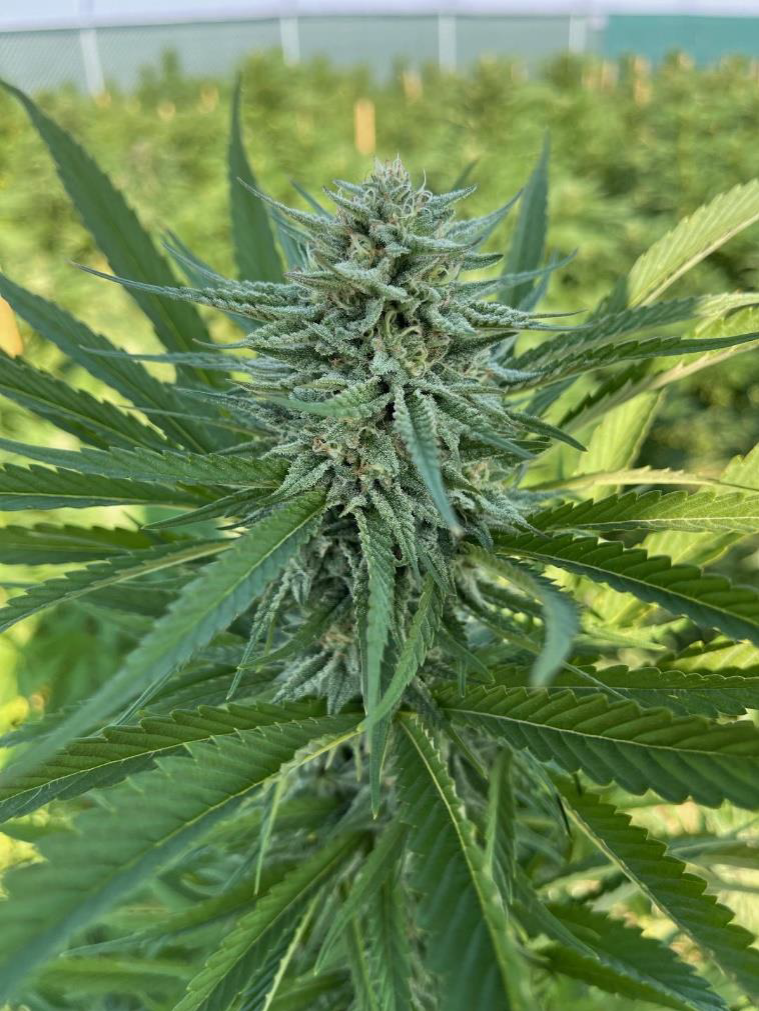
Plant stress reduced from 25% to under 3%. Root development time cut by a third.
Canna-Tech
THE CHALLENGE
The grower had reasonable concerns about introducing a microalgae-based biostimulant into a hydroponic system: algae buildup in rockwool, biofilm in irrigation lines, clogging, moisture issues, nutrient availability, salt buildup, and weaker clone stems. The propagation phase is where these concerns matter most because the consequences cascade into the rest of the cycle.
THE RESULT
Plant browning and stress reduced from approximately 25% of plants affected to less than 3%. Root development time improved from 14 to 21 days to 10 to 15 days. Taproot formation observed consistently in 5 to 7 days. Vegetative stage shortened from four weeks to three to three-and-a-half weeks, with some strains at two-and-a-half weeks. No biofilm or irrigation clogging was observed during the report period.
WHAT THIS PROVES, AND WHAT IT DOESN'T
Commercial cultivation efficiency report. The strain, system, propagation protocol, and operator practices matter. Other cannabis propagation operations should evaluate Pure-CV Hydro in their own system before committing to large-scale integration.
Field trials and side-by-side comparisons.
Defined control plots, measured results, single-farm specificity.
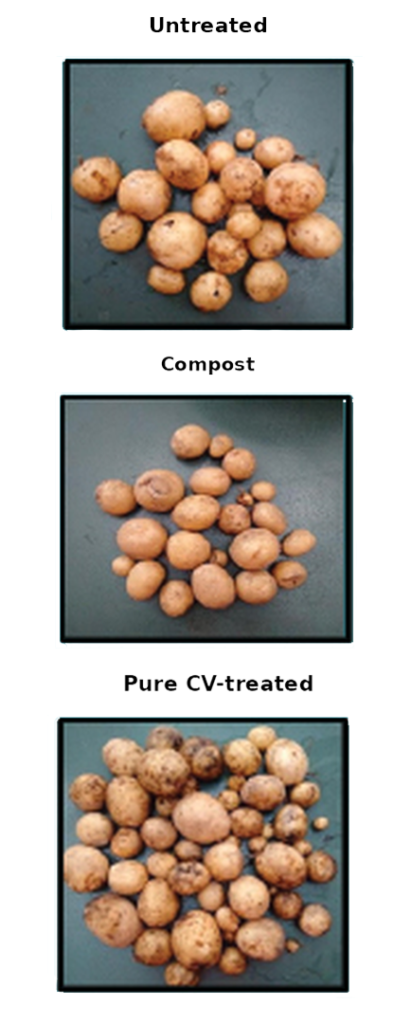
300% more weight than untreated. 413% more than compost-only.
Coastal South Carolina
Comparison
THE CHALLENGE
The trial was designed to compare Pure CV as a soil amendment against both an untreated control group and a compost-treated group on Yukon Gold potatoes. The plot was irrigated at least twice weekly for two to four hours per period, with an average flow rate of 3.63 gallons per minute.
THE RESULT
Pure CV-treated Yukon Gold potato plants yielded 300% more weight than untreated potatoes and 413% more weight than the compost-only comparison group. The largest Pure CV-treated potato weighed 42 grams more than the largest compost-treated potato and 30 grams more than the largest untreated potato.
WHAT THIS PROVES, AND WHAT IT DOESN'T
A specific Yukon Gold potato field trial under specific conditions: sandy loam soil, coastal South Carolina climate, defined irrigation regime, and a single growing cycle. Not a universal claim across all potato production or all soil types. The 413% comparison is to a compost-only group, not to a chemical fertilizer baseline.
72 bushels per acre on the treated plot. 60 on the control.
Comparison
THE CHALLENGE
The grower wanted to determine whether adding Pure CV during the winter wheat growing cycle could improve soil health and yield. The field had previously been used for row crops including tobacco, then converted to hay for approximately 15 years. In November, the field was sprayed with glyphosate as a burn-down, soil samples were taken, and wheat was no-tilled into the soil. Pure CV was applied in the third week of November, with a second application in mid-March alongside the standard liquid nitrogen.
THE RESULT
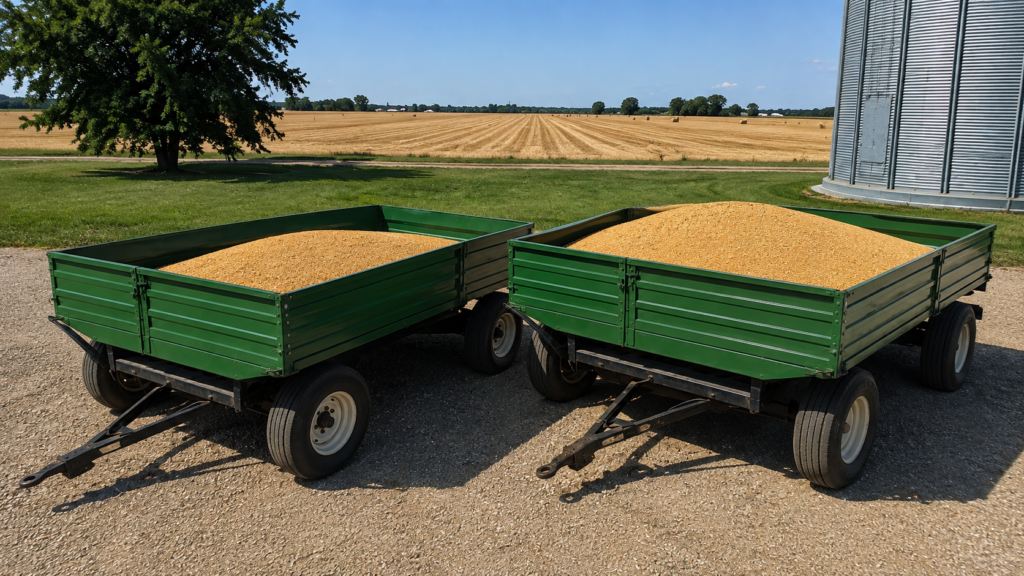
The 4.95-acre control plot yielded 60 bushels per acre. The 5.37-acre Pure CV-treated plot averaged 72 bushels per acre. Same farm, adjacent plots, same nitrogen program, same growing season.
WHAT THIS PROVES, AND WHAT IT DOESN'T
A single-farm side-by-side comparison on a specific field with a specific recent history. Not a universal claim for winter wheat across all geographies, soil types, or rotation histories. Replication on other operations is needed before generalizing.
Grower-reported case studies.
Direct observations from the grower, typically over a full season or longer. Reported in good faith, presented as field observations rather than replicated trials.
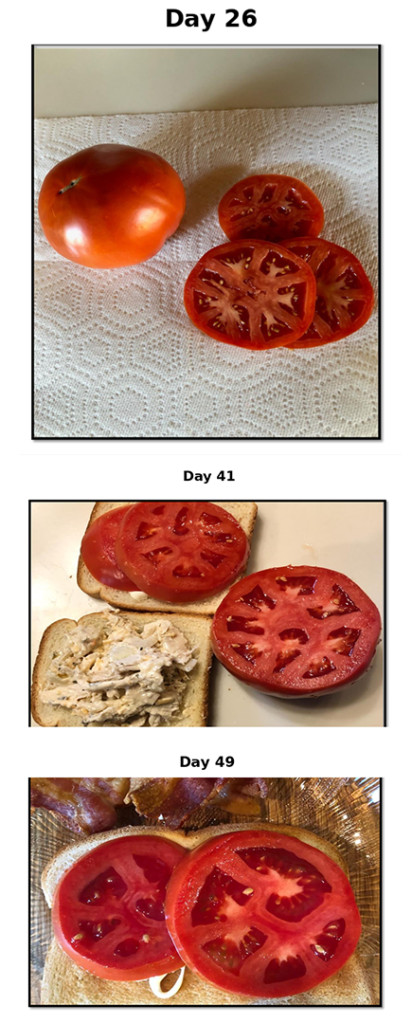
Tomato quality and shelf life extended by several weeks post-harvest.
Revis Farms
THE CHALLENGE
The client wanted to test Pure CV freshwater microalgae blends as an alternative to chemical fertilizer and determine whether the product had an effect on post-harvest tomato shelf life.
THE RESULT
The client reported a significant effect on tomato health and quality after harvest. Quality and shelf life were extended by several weeks. Supporting photos showed tomatoes at 32 days post-harvest and a sliced tomato at 49 days post-harvest.
WHAT THIS PROVES, AND WHAT IT DOESN'T
Client-observed shelf-life extension pending third-party lab verification. A meaningful signal worth replicating, but not a guaranteed claim across other tomato varieties, storage conditions, or operations.
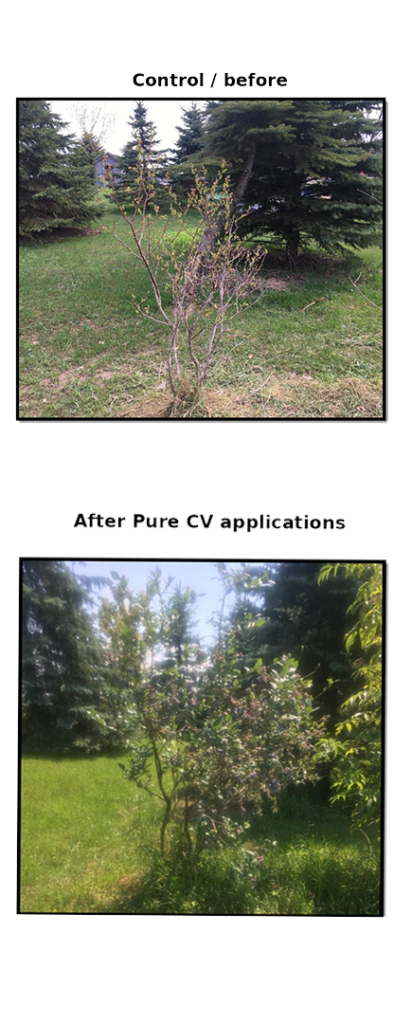
20-30% more fruit, by the grower's observation. Stronger plants, less pest pressure.
THE CHALLENGE
The grower wanted to compare treated and untreated blueberry bushes across two growing seasons, including both freshly planted bushes and mature plants. The trial used Pure CV-50 at 1 part product to 20 parts well water, applied every two weeks. Foliar application continued until just before picking time. Soil application continued throughout both seasons.
THE RESULT
The grower reported treated blueberries were more plentiful, darker in color, firmer, and more flavorful, with approximately 20 to 30% more fruit compared to untreated plants. He also observed thicker leaves, stronger plant growth, and less pest pressure on the treated bushes. Freshly planted treated bushes produced fruit in year two. Freshly planted untreated bushes did not.
WHAT THIS PROVES, AND WHAT IT DOESN'T
A two-season grower-reported field experience, not a replicated university study. The 20 to 30% fruit increase is the grower’s observation rather than a measured laboratory comparison. Other blueberry operations should validate the approach on a portion of their planting before scaling.
Two-to-three times bigger and fuller plants compared to the horse-manure-and-topsoil comparison.
Crop
Comparison
THE CHALLENGE
Troy ran an informal but direct comparison of squash plants treated with EcoFlourish against squash grown with horse manure and topsoil. He applied EcoFlourish twice: once at planting, and again when blooms started.
THE RESULT
Troy reported that the EcoFlourish-treated plants were two to three times bigger and fuller than the comparison group, with visibly stronger foliage and plant structure across the growing cycle.
WHAT THIS PROVES, AND WHAT IT DOESN'T
A grower-reported field observation from a small-plot comparison. Not a measured trial. Useful as a real-world directional indicator, especially for high-value vegetable production in similar conditions.
Approximately 25% yield recovery on a crop that would otherwise have been largely lost.
THE CHALLENGE
A Midwest produce grower’s cabbage crop suffered late-season hail damage. The crop appeared largely lost. A rescue application of Pure CV was applied in an attempt to support plant recovery.
THE RESULT
The grower reported approximately 25% yield recovery on a crop that would otherwise have been largely or entirely written off. The application reportedly contributed to improved crop health following the stress event.
WHAT THIS PROVES, AND WHAT IT DOESN'T
Field observation from a single rescue application. We do not present this as a guaranteed result for hail or stress-event recovery. We present it as one of the reasons growers in high-value, weather-exposed operations have requested EcoFlourish as a contingency tool.
Ongoing pilots and field observations.
Active studies, anecdotal field observations, and supporting reference points. The evidence is suggestive but not yet fully quantified.
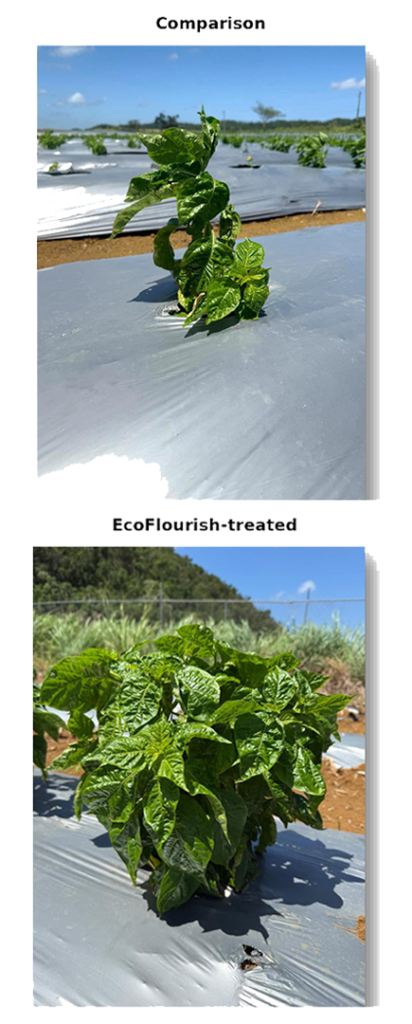
Enhanced root mass, healthier fruit, increased resilience to heat and variable rainfall.
THE CHALLENGE
EcoFlourish was evaluated under real-world Jamaican agricultural conditions for high-value Scotch Bonnet pepper production. The focus was on plant health, root development, crop uniformity, nutrient absorption, and resilience to heat stress and variable rainfall.
THE RESULT
The study materials report enhanced root mass development, improved nutrient absorption, healthier fruit formation and consistency, increased resilience to heat stress and variable rainfall, and potential for higher yields and improved crop uniformity. Comparison photos show stronger, fuller treated plants versus smaller untreated plants over the six-week observation window.
WHAT THIS PROVES, AND WHAT IT DOESN'T
Ongoing field study and pilot validation. We do not present quantified yield claims until measured harvest data is available. The signal is encouraging enough to warrant continued evaluation under similar tropical agricultural conditions.
Approximately 50% higher bean yield. Peppers 35% longer. Jalapenos resisted hornworm damage in the treated group.
Sites
Comparison
THE CHALLENGE
The purpose of this testing was to observe Pure CV performance across mixed soil types, temperature conditions, test sizes, and growing conditions, on a range of ornamental and vegetable crops.
THE RESULT
Treated azaleas were observed blooming earlier than untreated plants. Harvested peppers in the treated group were approximately 35% longer than untreated peppers. Bean plants showed a large size difference and approximately 50% higher yield at harvest. Treated jalapeno plants showed larger growth, while untreated jalapenos were damaged by hornworms during the same period.
WHAT THIS PROVES, AND WHAT IT DOESN'T
Supporting visual field-observation evidence across multiple plant types. Not a formal replicated study. The differential observations on jalapeno hornworm damage are notable but should not be interpreted as a pesticidal claim for EcoFlourish.
EcoFlourish sits on a body of freshwater microalgae research that goes back decades.
Chlorella vulgaris has been studied as a soil amendment, foliar input, and biostimulant across European and Asian agriculture for years. Peer-reviewed research has documented effects on plant growth, root development, nutrient utilization, crop yield, and post-harvest characteristics across multiple species. Published trials include work on lettuce, strawberries, grapevines, wheat, and other crops.
One example often referenced in the category is the 2018 Sweetgrass Garden trial in coastal South Carolina, conducted by Jaime Randise, MS and George J. Taylor, MD, which evaluated Chlorella vulgaris (cultivated by Barron Algae) as a soil amendment. The trial reported a 50% increase in collard greens biomass and a 168% increase in Blue Lake Bush bean weight in algae-treated plots over a 74-day cycle, with results meeting standard statistical significance.
We reference this kind of work as part of the broader Chlorella vulgaris scientific category, not as a product-identity claim for EcoFlourish. EcoFlourish powered by Pure CV is a refined and concentrated freshwater microalgae formulation built on this category of science. The product-specific evidence is the case study set above.
This distinction is important. We treat the category research as foundation, and the product evidence as the actual basis for any operational decision about EcoFlourish.
THE CATEGORY RESEARCH BASE
- Soil biology and amendment
- Plant biostimulation
- Root development
- Nutrient utilization
- Post-harvest characteristics
All nine case studies, summarized.
| TIER | CROP / OPERATION | LOCATION | HEADLINE RESULT | TIER LABEL |
|---|---|---|---|---|
| Tier 1 | Cannabis — Canna-Tech | Phoenix, AZ | Stress 25% → <3%. Root time cut by a third. | Commercial cultivation report |
| Tier 2 | Yukon Gold Potatoes | Coastal SC | 300% over untreated. 413% over compost-only. | Field trial, single-farm |
| Tier 2 | Winter Wheat | Briar View Farms | 72 bu/ac treated vs 60 control. | Side-by-side comparison |
| Tier 3 | Tomato | Revis Farms | Shelf life extended by several weeks. | Grower-reported |
| Tier 3 | Blueberries | Not specified | 20–30% more fruit over 2 seasons. | Grower-reported, multi-season |
| Tier 3 | Squash | North Carolina | 2–3x bigger and fuller plants. | Grower-reported field comparison |
| Tier 3 | Cabbage (Hail Recovery) | Midwest | ~25% yield recovery post-hail. | Grower-reported, anonymized |
| Tier 4 | Scotch Bonnet Peppers | Trelawney, Jamaica | Stronger root mass, heat resilience. | Ongoing pilot |
| Tier 4 | Mixed-Site Testing | Multiple sites | ~50% bean yield. Peppers 35% longer. | Field observations |
If one of these case studies fits your operation, let's talk.
For agronomists and advisors: view the technical brief